Modern Care Options: Hair Transplant in Islamabad Guide
Hair loss can affect confidence, appearance, and everyday social interactions. For people considering a lasting solution, a hair restoration procedure can offer natural-looking improvement when performed by a qualified professional. Hair Transplant in Islamabad has become a widely considered option because modern techniques focus on preserving existing hair, creating realistic density, and designing a hairline suited to individual facial features.
What Is Hair Transplantation?
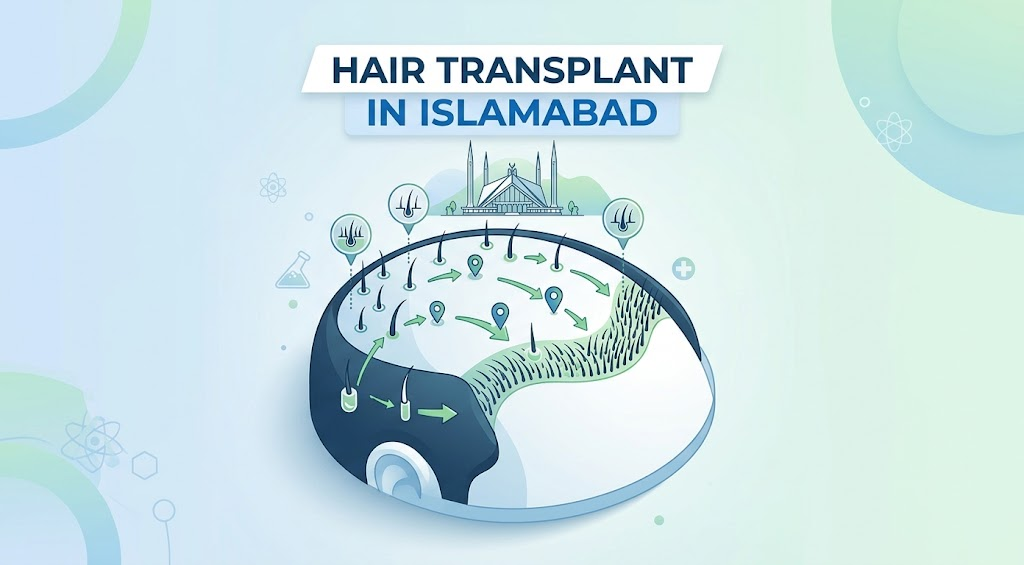
Hair transplantation is a surgical procedure that moves healthy hair follicles from a donor area, usually the back or sides of the scalp, to areas affected by thinning or baldness. The transplanted follicles are selected because they are generally more resistant to the effects of pattern hair loss. Once established, they can continue producing hair according to their natural growth cycle.
A successful procedure carefully balances density, direction, spacing, and hairline design. The surgeon must also protect the donor supply so that the scalp maintains a natural appearance both immediately after treatment and in the future.
Why Consider Hair Transplant in Islamabad?
Islamabad offers access to clinics and medical professionals who provide contemporary hair restoration services. A local procedure can also make follow-up appointments easier during the recovery period.
Another benefit is the opportunity to receive an individualized assessment before committing to surgery. Rather than choosing a treatment based only on advertisements or package prices, patients can discuss their pattern of hair loss, donor availability, medical history, expectations, and long-term restoration goals with a qualified surgeon.
Common Hair Transplant Techniques
Follicular Unit Extraction, commonly called FUE, involves removing individual follicular units from the donor region and placing them into prepared recipient sites. Because the follicles are extracted separately, the method avoids a long linear donor scar and can be suitable for many patients. The final appearance depends heavily on careful extraction, graft handling, placement, and postoperative care.
Another technique is Follicular Unit Transplantation, or FUT. In this approach, a strip of donor scalp is removed and divided into individual grafts before implantation. FUT may provide a substantial number of grafts in selected cases, but it leaves a linear scar. The most appropriate technique depends on factors such as hair characteristics, donor density, scalp condition, previous procedures, and the surgeon’s assessment.
Who May Be a Good Candidate?
Suitable candidates typically have a stable pattern of hair loss, adequate donor hair, and realistic expectations about what surgery can achieve. A consultation should determine whether the cause of hair loss is appropriate for transplantation. Certain temporary or medically driven forms of shedding may require diagnosis and treatment before surgery is considered.
Consultation and Hairline Planning
The consultation is one of the most important parts of Hair Transplant in Islamabad. During this appointment, the surgeon may examine the scalp, assess donor density, review the pattern of loss, and discuss previous treatments. Questions about medications, smoking, allergies, and medical conditions may identify factors that could influence treatment.
Hairline design should be personalized rather than copied from another patient. A natural hairline normally has subtle irregularity and changes in density rather than appearing like a perfectly straight line. The surgeon must consider age, facial proportions, existing hair, donor limitations, and the patient’s preferred level of coverage.
What Happens During the Procedure?
On the treatment day, the donor and recipient areas are prepared, and local anesthesia is generally used to keep the patient comfortable. Depending on the selected method and number of grafts, the procedure may take several hours. The follicles are handled carefully because their survival can be affected by extraction, storage, and implantation techniques.
After grafts are prepared, they are placed into tiny recipient sites at carefully selected angles and directions. This stage is important for creating natural flow and avoiding an artificial appearance.
Recovery After Hair Restoration
Recovery varies between individuals, but mild swelling, redness, tenderness, or small crusts can occur during the early days. Patients should follow the clinic’s washing instructions and avoid scratching or unnecessarily touching the treated area.
During Hair Transplant in Islamabad recovery, patients should understand that transplanted hair does not become thick immediately. Some implanted hairs may shed after the procedure, which can be a normal part of the growth cycle. New growth generally develops gradually, so judging the final result too early can create unnecessary concern.
When Will Results Become Visible?
Hair growth occurs in stages rather than overnight. The transplanted follicles need time to settle and enter their normal growth cycle. Full maturation can take many months, and individual results vary.
The final outcome depends on factors including graft survival, donor quality, hair characteristics, surgical technique, age, genetics, and aftercare. Hair Transplant in Islamabad can improve coverage and framing of the face, but it cannot guarantee a specific density or completely stop future hair loss in untreated areas.
Risks and Safety Considerations
As with any surgical procedure, hair transplantation has potential risks. These may include infection, bleeding, prolonged swelling, temporary numbness, scarring, poor graft growth, uneven density, or an unnatural hairline.
Safety should take priority over promotional claims. Prospective patients should verify the qualifications of the doctor performing the surgery, ask where the procedure will take place, understand who handles graft extraction and placement, and confirm what follow-up care is provided. A clear consent process and realistic discussion of limitations are important signs of responsible practice.
Choosing the Right Clinic
When comparing Hair Transplant in Islamabad providers, look beyond discounted packages and social media photographs. Ask about the surgeon’s training and experience, the technique recommended for your case, graft estimates, sterilization procedures, and who performs each surgical step.
It is also helpful to ask how the clinic manages complications and what happens if the desired outcome is not achieved. Patients should receive transparent information about costs, possible additional sessions, medication, recovery, and follow-up visits. A consultation should feel educational rather than pressured.
Cost Factors to Understand
The cost of Hair Transplant in Islamabad can vary considerably. Factors may include the number of grafts required, technique, surgeon experience, clinic facilities, degree of hair loss, and complexity of the case. A smaller restoration generally requires fewer grafts, while extensive baldness may require a larger treatment plan or multiple sessions.
Patients should avoid selecting a provider solely because of the lowest quoted price. Extremely low-cost offers may not explain important details about medical supervision, graft handling, aftercare, or what is included.
Aftercare and Long-Term Maintenance
Proper aftercare supports healing and helps protect the transplanted area during its early stages. Patients should follow instructions regarding scalp washing, medications, sleeping, sun exposure, exercise, and returning to work. Any unusual pain, increasing redness, fever, excessive bleeding, or other concerning symptoms should be reported promptly to the treating medical team.
Setting Realistic Expectations
Hair restoration works best when expectations are realistic. The purpose is usually to improve coverage and create a more balanced appearance, not to recreate the exact hair density of adolescence. A skilled surgeon may prioritize the frontal region or other visually important areas rather than spreading grafts too thinly.
Hair Transplant in Islamabad may be an effective option for appropriately selected patients, but results differ from person to person. A careful evaluation, experienced surgical team, suitable technique, and commitment to aftercare all contribute to a successful experience.
Final Thoughts
Choosing hair restoration is a personal decision that deserves careful research. Patients should focus on medical qualifications, individualized planning, realistic outcomes, safety standards, and long-term support instead of relying only on promotional promises. Hair Transplant in Islamabad can provide meaningful improvement for suitable candidates when the procedure is properly planned and performed.
The best first step is a professional consultation for Hair Transplant in Islamabad. During that visit, discuss the cause of hair loss, donor capacity, expected results, available techniques, risks, recovery, and long-term strategy. With accurate information and appropriate medical guidance, patients can decide whether transplantation fits their goals and circumstances.